June is honestly one of the most underrated months to travel, making it the perfect time to find the best national parks to visit in June before the summer rush.
July gets all the attention. But by July, the parking lots are packed by 7am, the campsites are gone, and half your hike is spent dodging other people. June? The roads have just opened. The wildflowers are still blooming. And while some popular spots do get busy, the massive mid-summer crowds haven’t fully arrived yet.
I’ve road-tripped through national parks every summer for years. June is consistently my favorite month to go — and this list is built from actual experience
If you’re planning your upcoming summer trip and wondering where to go, here is my honest, practical guide to help you choose. I’ve also included the things the other lists don’t tell you — like which parks are already overcrowded in June, which ones require advance reservations, and where to go if you want the beauty without the chaos.
Table of Contents
Top 10 Best National parks to visit in june
1. Yellowstone National Park, Wyoming/Montana
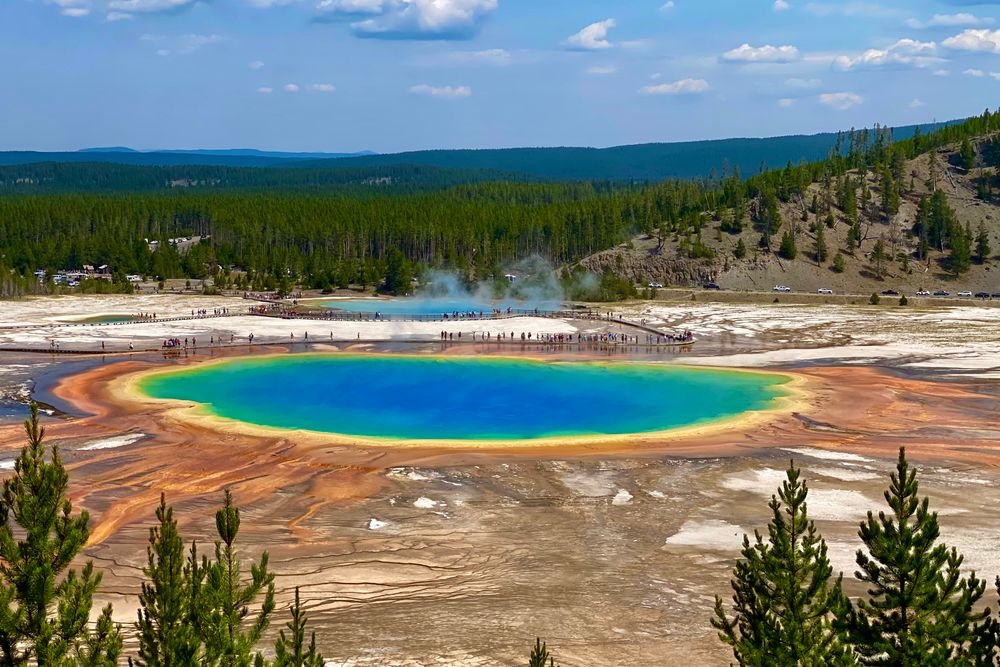
Yellowstone is in a category of its own. There’s no other place on earth where you can watch a geyser erupt, spot a grizzly bear in a meadow, and hike through a canyon with walls painted orange and yellow — all in the same afternoon. It sounds like I’m overselling it. I’m not.
The Lamar Valley in early June is something else entirely. Bison calves are still amber-colored and small. Wolves are denning and more visible than any other time of year. Mist rises off the Yellowstone River at dawn. People call it “America’s Serengeti” and for once, the nickname actually fits.
Old Faithful is mandatory, yes. But Grand Prismatic Spring is the one that actually stops you cold. Stand at the boardwalk edge, watch the steam rise off rings of orange, green, and deep blue, and try to convince yourself you’re still on Earth.
For hiking, the Lone Star Geyser trail (around 5 miles round trip) is one of the best-kept secrets in the park.
It follows the Firehole River through quiet forest, and if you time it right, you’ll watch the geyser erupt roughly every 3 hours. Since there’s no cell service and fewer crowds here, it’s often just you and the geyser doing its thing.
- Best Time to Visit: June–August (For full access), Sept–Oct
- Park & Pass Cost: $35 per vehicle pass (Valid for 7 days)
- Must-See: Grand Prismatic Spring, Old Faithful & Lamar Valley wildlife
- Official Website: Check live trail alerts directly on the Official Yellowstone National Park Website.
2026 Note: Yellowstone does not require any timed entry permits or vehicle reservations to access the park this season.
2. Sequoia & Kings Canyon National Parks, California
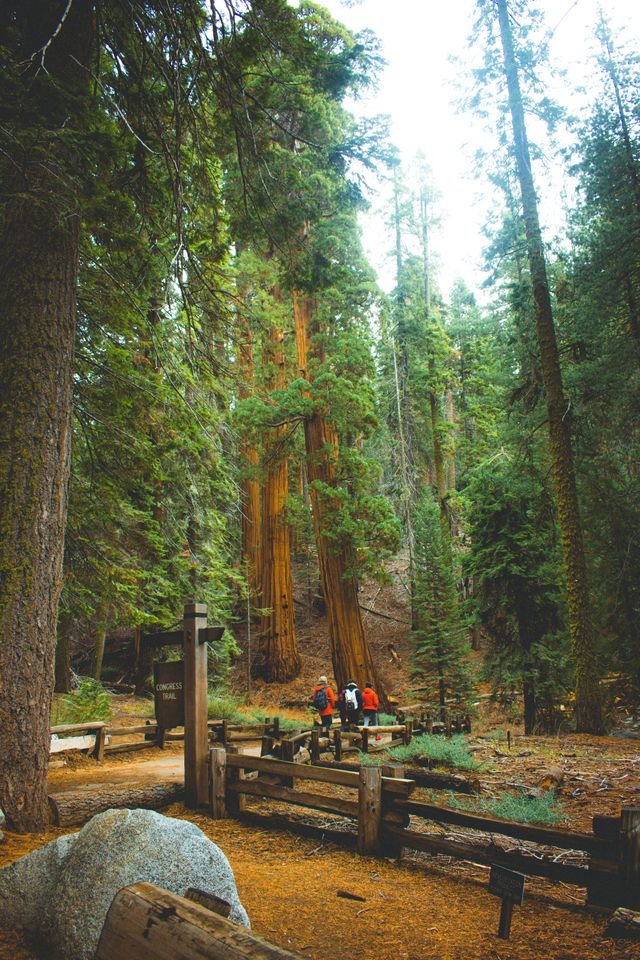
Sequoia and Kings Canyon sit right next door to Yosemite, get a fraction of the visitors, and in my honest opinion offer just as much wonder. The giant sequoias here are the largest trees on Earth by volume, and standing next to one resets your sense of scale completely. General Sherman Tree — the world’s largest living tree by volume — is right there in Sequoia. You walk up, you look up, and your brain just kind of stalls.
June is ideal because Cedar Grove in Kings Canyon opens around late May/early June (check for exact dates, as it varies by snowpack), giving you access to the beautiful Kings River canyon. While the famous Zumwalt Meadow trail remains closed for restoration due to past flood damage, you can still enjoy the stunning views of the canyon walls right from the Cedar Grove area.
The Generals Highway connecting the two parks is a spectacular drive. Take your time on it. Pull over often.
Best Time to Visit: June–August (For full canyon road access)
How to Get There: Fly to Fresno (FAT) + 1.5-hour drive to Big Stump Entrance
Park & Pass Cost: $35 per vehicle pass (Valid for 7 days)
Must-See: General Sherman Tree, Moro Rock & Kings River Canyon
Official Website: Check live road closures and trail status on the Official Sequoia & Kings Canyon Website.
2026 Note: No timed entry permits currently required for Sequoia or Kings Canyon. However, keep in mind that weekend crowds can still get pretty intense as June rolls on. Campsite reservations at Lodgepole and Azalea campgrounds go quickly — book them on recreation.gov well in advance
3. Grand Teton National Park, Wyoming
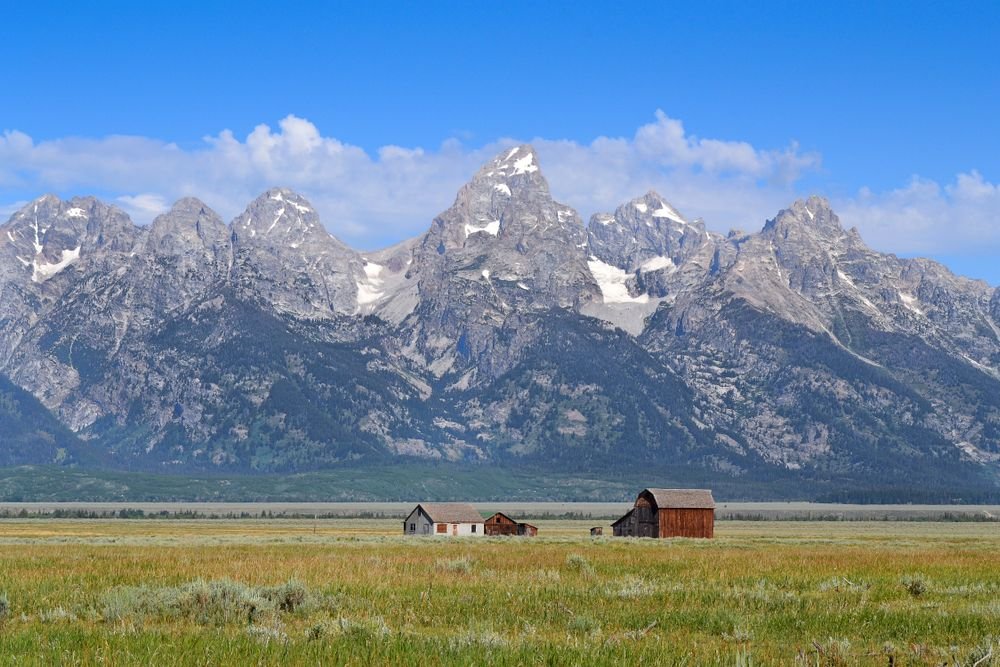
I have visited Grand Teton in May, July, and September—and June is arguably the best month of all.
In June, snow still caps the peaks of the Teton Mountains. The Snake River flows swiftly with cold water. And the view—the reflection of the mountains in Jenny Lake on a calm morning—is one of the most photographed scenes in America.
Jenny Lake is the park’s standout attraction. Most people take the shuttle boat to reach Hidden Falls and Inspiration Point—and yes, it is a wonderful experience—but if you want to avoid the boat lines, hike along the western shore starting from the String Lake trailhead. This adds about 4 miles to your journey, but you will pass through the forest and spot wildlife that the boat crowds completely miss.
Make sure to visit Schwabacher Landing for sunrise. Arrive before 6:00 AM, and you can enjoy that famous beaver-pond reflection all to yourself. By 8:00 AM, cars are lined up along both sides of the road.
- Best Time to Visit: June (For snow-capped peaks) & September
- Park & Pass Cost: $35 per vehicle pass (Valid for 7 days)
- Must-See: Jenny Lake, Hidden Falls & Schwabacher Landing sunrise
- Official Website: Check live trail alerts and book sites on the Official Grand Teton Website.
Note for 2026: Park entry does not require an advance reservation, but campsites fill up quickly. Every campsite here, including the tent-only Jenny Lake Campground, now requires advanced booking. You must secure your spot online via recreation.gov up to six months in advance before arriving.
4. Glacier Bay National Park, Alaska
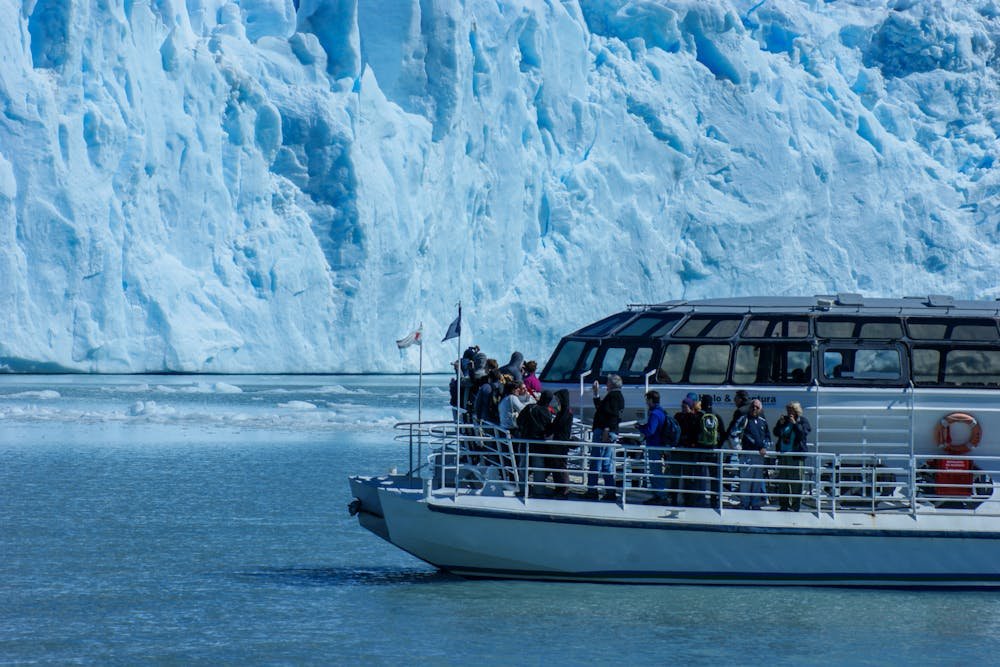
Glacier Bay is accessible only by plane or boat, meaning most visitors arrive on cruise ships, spend a day, and leave. If you visit independently and book the daily park catamaran tour from Bartlett Cove, this remote national park feels entirely yours to explore.
June is the best time to visit—the park is fully open, humpback whales are feeding in the bay, bears can be spotted roaming the shoreline, and glaciers are actively calving (meaning you can watch and hear massive chunks of ice breaking off and crashing into the water). Witnessing a glacier calve is one of those natural phenomena that is truly difficult to emotionally prepare for; it is a thunderous, thrilling experience unfolding right before your eyes.
Kayaking in Glacier Bay is a spectacular experience. You can embark on multi-day kayaking trips in the bay through outfitters based in Gustavus, camping on beaches with glaciers visible in the background. While it requires careful planning and a mandatory, free backcountry permit from the park’s visitor center, it is a once-in-a-lifetime trip for the right traveler.
- Best Time to Visit: June–August (For wildlife & active glacier calving)
- How to Get There: Fly from Juneau (JNU) to Gustavus (GST) or take the Alaska Marine Highway ferry
- Park & Pass Cost: Free entry (No park entrance fee required)
- Must-See: Margerie Glacier calving, humpback whales & Bartlett Cove trails
- Official Website: Check digital boater rules and ferry schedules on the Official Glacier Bay Website
2026 Note: No timed entry permits or vehicle reservations are required to enter Glacier Bay, but booking your day-boat catamaran tours months in advance is highly recommended.
5. Olympic National Park, Washington
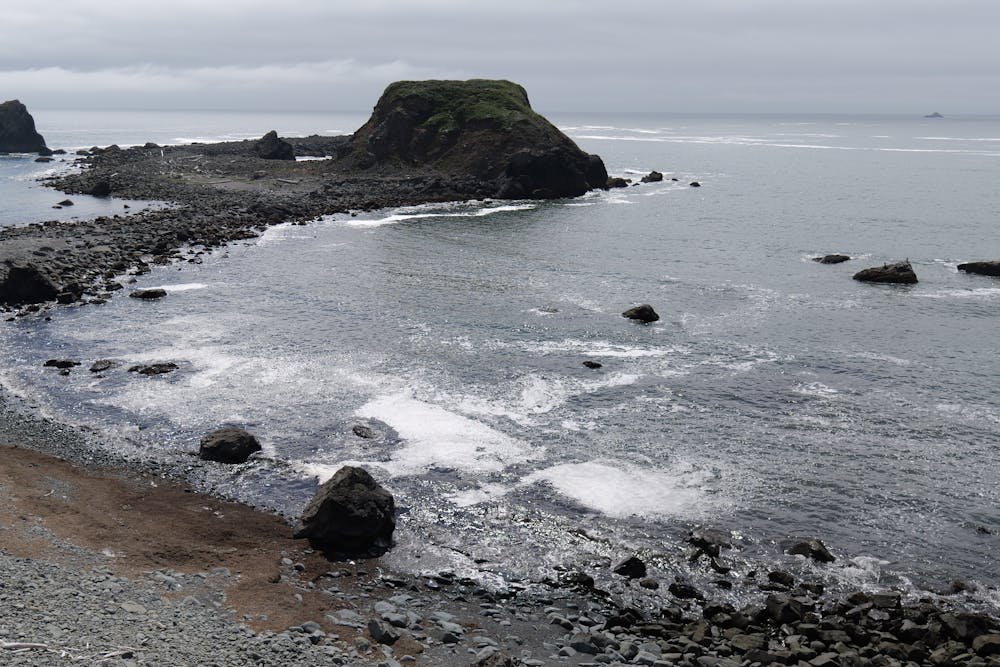
Olympic is a national park that truly surprises visitors. People arrive expecting a forest, only to find themselves standing on a wild Pacific coastline where sea stacks emerge from the mist. Or, they might trek into the Hoh Rain Forest expecting a scenic spot, only to feel as though they’ve stepped into a Tolkien novel—with every branch and root draped in thick, dripping moss.
The park comprises three distinct zones: the glacier-capped Olympic Mountains, the Hoh Rain Forest, and a rugged, roughly 70-mile-long Pacific coastline. You can literally hike through three completely different ecosystems in a single day. I’ve done it myself; it’s exhausting, but absolutely worth it.
Ruby Beach is my favorite spot in the park. In the late afternoon, when sunlight hits the sea stacks and tide pools are revealed, the landscape feels otherworldly. Arrive before sunset and plan to stay for a while.
- Best Time to Visit: June–August (For the lowest rainfall in the rainforest)
- How to Get There: Fly to Seattle-Tacoma (SEA) + 2.5-hour drive and ferry to Port Angeles
- Park & Pass Cost: $30 per vehicle pass (Valid for 7 days)
- Must-See: Hoh Rain Forest, Ruby Beach sea stacks & Hurricane Ridge
- Official Website: Check road status and campground availability on the Official Olympic National Park Website.
2026 Note: Parking at the Hoh Rain Forest fills up very quickly on weekends (sometimes by 7:00 AM). Arrive before 8:00 AM or, if possible, visit on a weekday. Most popular campgrounds, including Hoh Rain Forest and Kalaloch, require advance reservations during the summer peak on recreation.gov, so plan your booking months ahead.
6. New River Gorge National Park, West Virginia
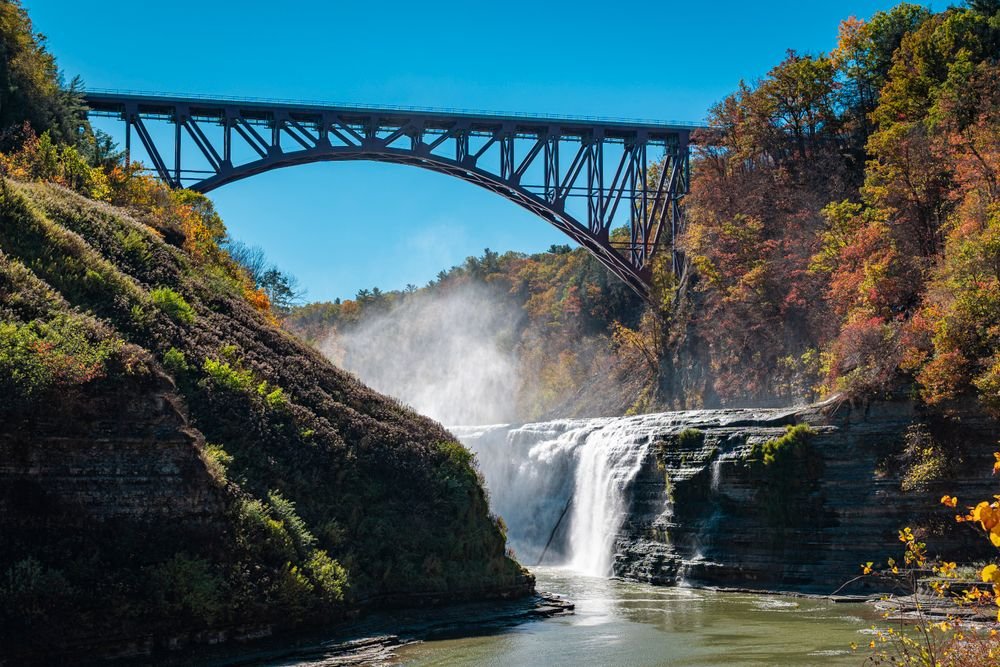
New River Gorge became a national park in 2020, making it one of the newest additions to the system—and many people aren’t even aware of it yet. This means you can easily beat the massive summer rush found in older parks.
The gorge is deep, lush, and ancient; the New River is one of the oldest rivers in the world, having carved its way through the Appalachian rock for millions of years. June offers excellent water levels for whitewater rafting, the trees are vibrant and green, and you can often enjoy the place almost entirely to yourself.
The New River Gorge Bridge is one of the longest steel arch bridges in the world. There is a spectacular viewpoint—the Canyon Rim Visitor Center—where you can stand at the edge and look down at the river flowing 876 feet below. A winding scenic road leads down to Thurmond, a fascinating, historic railroad town that makes you feel like you’ve stepped back into the 1920s.
While “Bridge Day” takes place in October, June is the best time to visit the park for outdoor activities.
- Best Time to Visit: June–August (Best for whitewater rafting)
- Park & Pass Cost: Free entry (No park entrance fee required)
- Must-See: New River Gorge Bridge viewpoint & Endless Wall Trail
- Official Website: Check current trail safety and rafting guidelines on the Official New River Gorge Website.
2026 Note: No timed entry permits or vehicle reservations are required to enter New River Gorge, but you should book guided whitewater rafting trips weeks ahead for June weekends.
7. Acadia National Park, Maine
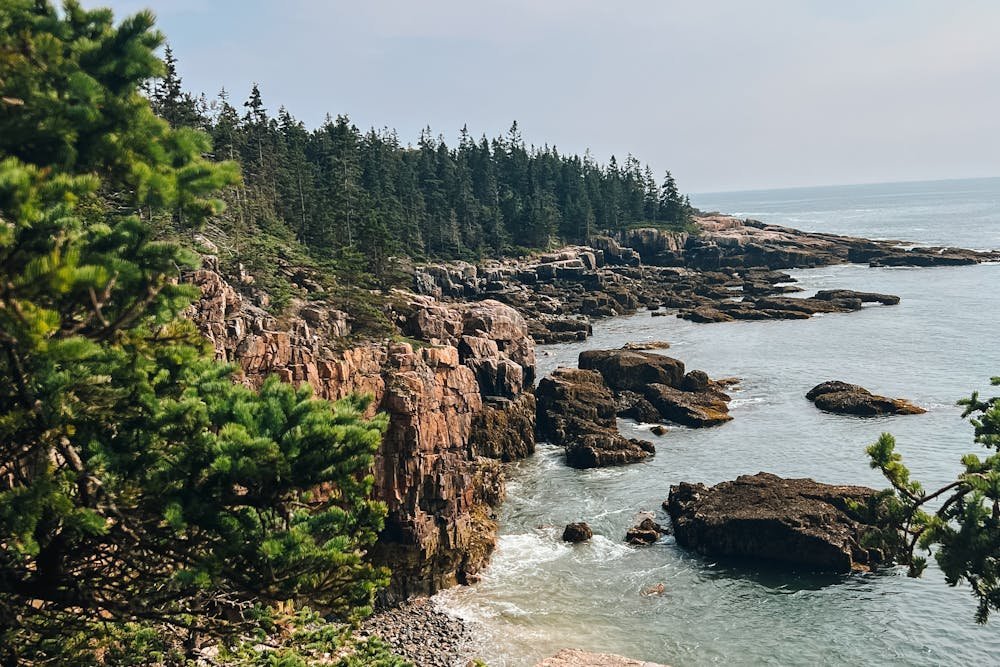
Acadia is the only major national park on the US East Coast, and June is genuinely its sweet spot. Bar Harbor hasn’t fully descended into peak tourist season yet, the lupine wildflowers are still blooming purple along the roadside, and the temperatures are cool enough to make hiking feel like a pleasure rather than a survival exercise.
Cadillac Mountain is the first place in the continental US to see the sunrise — and yes, people actually wake up at 3am to drive to the summit for this. I did it once. It was cold, there were 40 other cars in the dark, and when the sky turned pink and gold over the Atlantic, every single person went quiet at the same time. One of those rare collective moments that strangers share.
The carriage roads are one of Acadia’s best-kept secrets. Originally built by John D. Rockefeller Jr. in the early 1900s, these 45 miles of gravel paths are perfect for cycling or walking, completely free of cars, and wind past stone bridges, ponds, and forested hills. Rent a bike in Bar Harbor and just go.
- Best Time to Visit: June (For lupine wildflowers) & September–October
- Park & Pass Cost: $35 per vehicle pass (Valid for 7 days)
- Must-See: Cadillac Mountain sunrise, Jordan Pond & Carriage Roads
- Official Website: Check live shuttle times and reservation alerts on the Official Acadia National Park Website.
2026 Note: A reservation is required to drive to the Cadillac Mountain Summit between late May and late October. Vehicle reservations must be booked online at recreation.gov, with a portion of tickets released 2 days in advance at 10 AM EDT. The Island Explorer shuttle bus is free and runs frequently, connecting Bar Harbor to most trailheads without the parking stress.
8. Great Sand Dunes National Park, Colorado
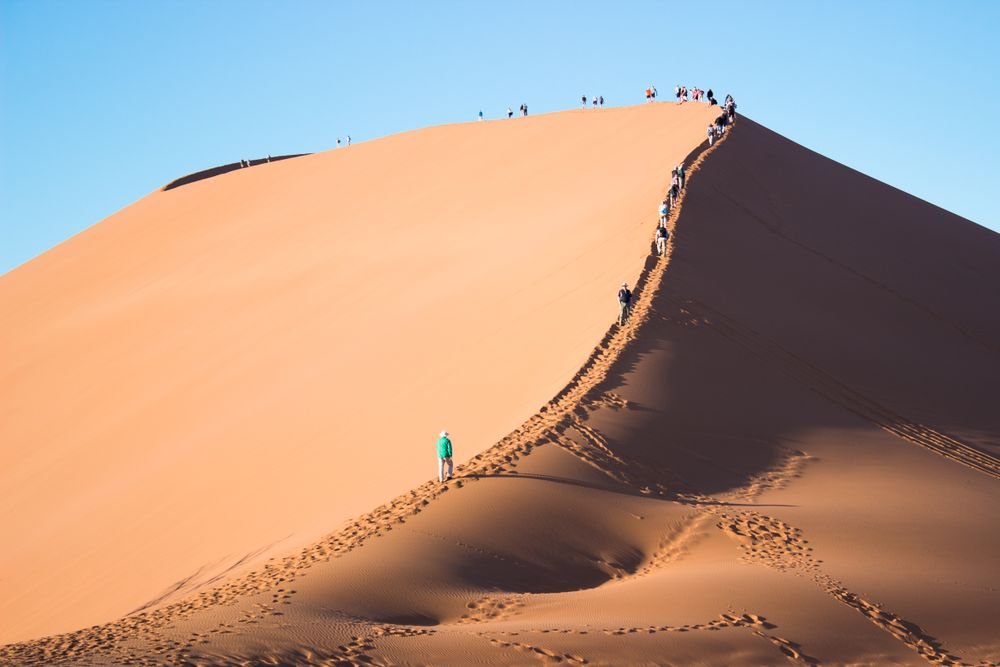
Great Sand Dunes is the park that almost everyone walks past on their Colorado road trip and almost no one regrets stopping for. Towering up to 750 feet — the tallest sand dunes in North America — they sit against the backdrop of the Sangre de Cristo Mountains in a way that makes no geographic sense and looks completely spectacular.
In June, Medano Creek usually flows along the base of the dunes during early morning hours, fed by snowmelt from the mountains. This creates a shallow, sandy-bottomed “beach” that kids absolutely lose their minds over. You can wade in, sandboard down the dunes, and then cool off in the creek — all in the same morning. By mid-July, the creek typically dries up, so June is the ideal window.
While there’s no rental shop inside the park itself, you can rent gear just outside the entrance at the Oasis Store or at Kristi Mountain Sports in Alamosa. Sunrise and sunset are the best times to photograph the dunes; the shadows create depth and texture that disappears in midday light.
Don’t miss Zapata Falls, about 4 miles south of the park entrance. It’s a short but slightly awkward walk through a creek, and the waterfall you find inside the narrow canyon is genuinely impressive.
- Best Time to Visit: May–June (For Medano Creek flow) & September
- Must-See: Star Dune, Medano Creek splashing & Zapata Falls hike
- Park & Pass Cost: $25 per vehicle pass (Valid for 7 days)
- Official Website: Check current creek flow levels and sand temperatures on the Official Great Sand Dunes Website.
2026 Note: No timed entry permits are required to enter Great Sand Dunes National Park, but campsites at Pinon Flats book out months ahead for June.
9. Theodore Roosevelt National Park, North Dakota
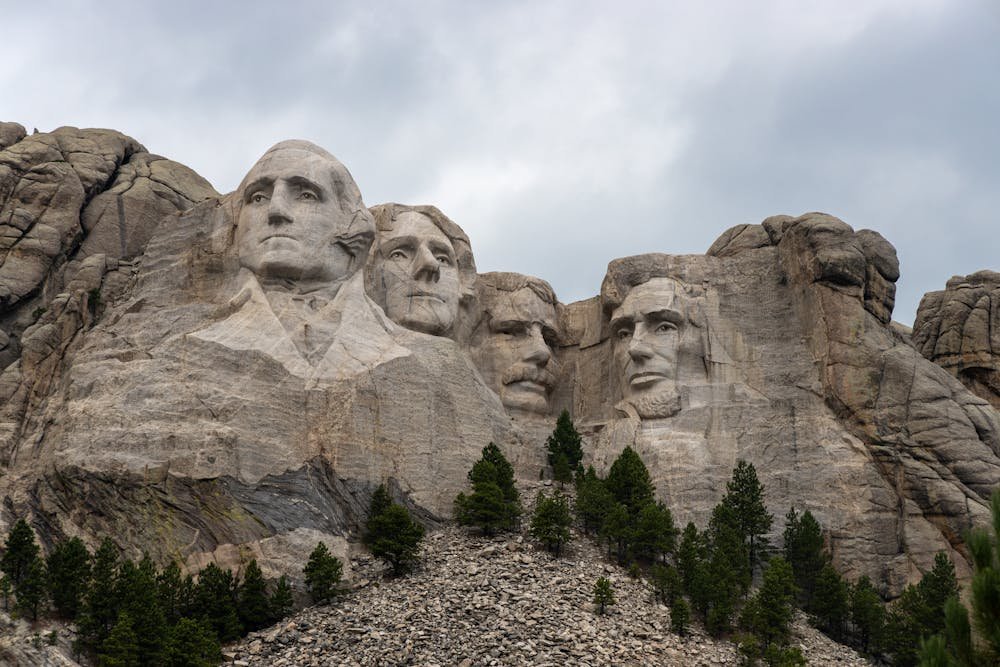
This is my “sleeper pick” on the list—a park that consistently surprises visitors, as they often arrive without any specific expectations.
North Dakota’s Badlands feel like another world. Amidst the prairies, hills (buttes) striped with red, orange, and gray rise up in shapes that look almost sculpted. The park is home to wildlife such as wild horses, bison, prairie dogs, and elk—all of which can be easily spotted just a short walk from your car or while driving the South Unit Scenic Drive, which currently operates as an out-and-back route due to past road damage.
In June, the grass is a deep, lush green, and the wildlife is highly active. Bison calves are still young at this time. Wild horses (technically “feral” horses—descendants of domesticated ones that returned to the wild—but now an iconic part of the landscape) roam freely and often wander close to the road.
The park consists of two sections—North and South—located about 70 miles apart along the I-94 highway. The South Unit is more accessible and attracts more visitors; the North Unit is quieter and more rugged, and in my opinion, offers even more spectacular scenery. If possible, make sure to visit both areas.
- Must-See: Painted Canyon overlook, wild horses & Wind Canyon Trail
- Best Time to Visit: June (For active wildlife & green valleys) & September
- Park & Pass Cost: $30 per vehicle pass (Valid for 7 days)
- Official Website: Check road statuses and wildlife safety rules on the Official Theodore Roosevelt Website.
2026 Note: No timed entry permits or reservations are required to enter either unit of Theodore Roosevelt National Park this season.
10. Rocky Mountain National Park, Colorado
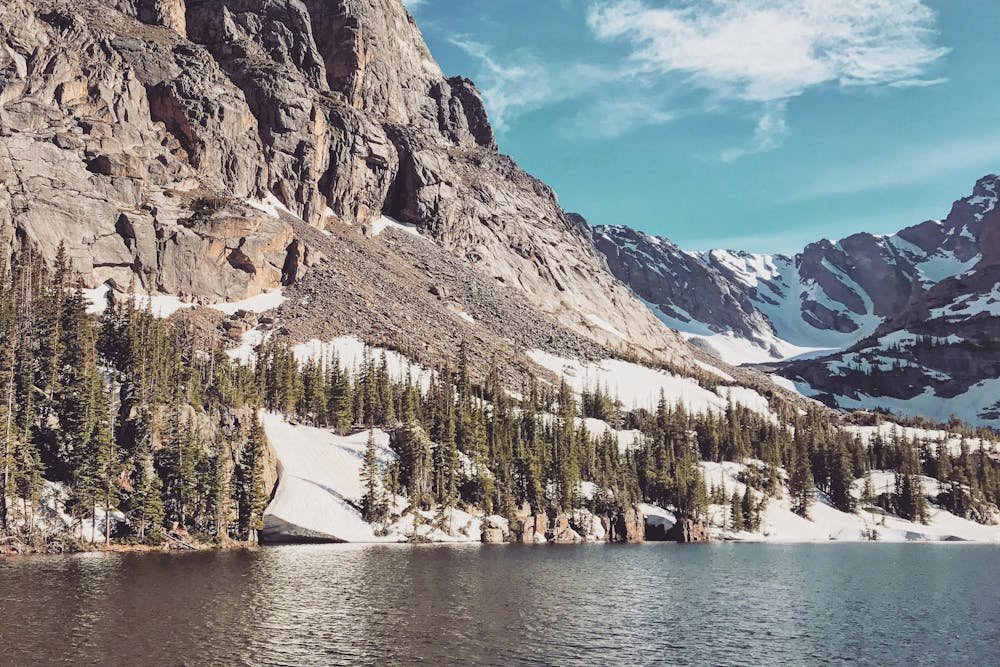
Trail Ridge Road — the highest continuous paved road in any US national park — opens around Memorial Day weekend each year. That means June is the very first month you can drive all the way across the park without hitting a snow closure. That alone makes it special.
The Bear Lake area is the most popular section, and for good reason. The trail to Emerald Lake is only about 3.6 miles round trip but packs in alpine lakes, wildflowers, and mountain views that feel like screensavers. Go early — the parking lot fills by 7:30 AM, no joke.
2026 Note: Rocky Mountain requires timed entry permits from late May through mid-October.
Book yours at recreation.gov as soon as they are released on the first day of the previous month (for example, June permits open on May 1st). The permits for the Bear Lake Corridor and the main park entrance fill up fast — sometimes within hours of release. If you miss the permit window, your best bet is to arrive before 6am or after 5pm.
One thing I always tell people: don’t skip the Alpine Visitor Center. At 11,796 feet, it’s the highest visitor center in the US national park system, and the view from the deck will genuinely make your brain malfunction. Worth every step.
- Park & Pass Cost: $30 per day pass or $35 per vehicle pass (Valid for 7 days)
- Best Time to Visit: June–August (For Trail Ridge Road access) & September
- Must-See: Trail Ridge Road, Emerald Lake hike & Alpine Visitor Center view
- How to Get There: Fly to Denver International Airport (DEN) + 1.5-hour drive to Estes Park Entrance
- Official Website: Secure your mandatory entry permits and check snow conditions on the Official Rocky Mountain Website.
Frequently Asked Questions
Q1: How many days do I need to explore these June national parks?
Ans: To truly experience any major park on this list without rushing, you need at least 2 to 3 full days. A single day is only enough for a quick scenic drive and one short hike. If you plan your itinerary right, you can easily combine parks that sit right next door to each other—like spending 4 days in Yellowstone and then driving straight into Grand Teton to maximize your summer vacation.
Q2: Which US national parks are the least crowded in June?
Ans: Parks like Theodore Roosevelt in North Dakota and New River Gorge in West Virginia are fantastic sleeper picks that see a fraction of the summer crowds. If you want dramatic scenery without bumper-to-bumper traffic, these are your best bets. However, if you are looking to balance your nature trip with vibrant cities or coastal towns, you should check out my comprehensive guide on the 20 Best Places to Visit in the USA in June to plan a well-rounded summer itinerary.